kimzolciakwedding.com – Iran, with its diverse geography and varied climate, is home to some of the most stunning natural landscapes in the world. From towering mountains and lush forests to arid deserts and salt plains, Iran’s natural wonders are as varied as they are breathtaking. The country’s diverse topography is shaped by the Alborz and Zagros mountain ranges, expansive deserts, fertile plains, and coastal areas along the Caspian Sea and the Persian Gulf. This article will take you on a journey through some of Iran’s most iconic and awe-inspiring natural wonders, from the majestic Alborz Mountains to the vast Lut Desert.
The Alborz Mountains: Iran’s Majestic Northern Range
Stretching across northern Iran, the Alborz Mountains are one of the country’s most prominent geographical features. These mountains form a natural barrier between the Caspian Sea to the north and the Iranian Plateau to the south, creating a distinct contrast in climate and ecosystems between the two regions.
- Mount Damavand: At the heart of the Alborz Mountains stands Mount Damavand, Iran’s highest peak and one of the tallest volcanoes in the world, standing at an impressive height of 5,610 meters (18,410 feet). The snow-capped peak of Damavand is a symbol of Iranian pride and is featured prominently in Persian mythology and literature. The mountain offers a popular trekking route for climbers, as well as stunning views of the surrounding landscapes. It is also a significant geological site, being an active volcano with fumaroles and hot springs at its base.
- Caspian Hyrcanian Mixed Forests: The slopes of the Alborz Mountains are home to the Caspian Hyrcanian mixed forests, a UNESCO-listed natural heritage site. These lush, temperate forests are teeming with biodiversity and are home to numerous plant and animal species, many of which are endemic to the region. The forests stretch from the Caspian Sea down to the lower mountain slopes, creating a unique ecosystem that is vital for wildlife conservation.
- Alamut Valley: Known for its historical significance as the seat of the Assassin sect in medieval times, Alamut Valley is also renowned for its dramatic landscapes, including rugged cliffs, picturesque villages, and scenic viewpoints. The valley is surrounded by the majestic Alborz Mountains, providing a stunning backdrop to this culturally rich and remote region.
The Zagros Mountains: Iran’s Majestic Backbone
The Zagros Mountains run parallel to the Alborz Mountains, stretching from the Turkish border in the west down to the Persian Gulf in the south. The Zagros range is Iran’s longest mountain chain and forms the backbone of the country, shaping its climate and geography.
- Kurdistan and Lorestan: The Zagros Mountains are home to some of Iran’s most beautiful regions, including Kurdistan and Lorestan. The region is dotted with deep valleys, rushing rivers, and dramatic cliffs. Kurdistan is known for its rugged beauty, with the Shaho Mountains providing a stunning landscape for hikers and nature enthusiasts. Lorestan is famous for its waterfalls, such as the Shah Beig and Gavmishan Falls, as well as its charming villages nestled in the mountains.
- Gavkhouni Wetland: Nestled at the foot of the Zagros Mountains, the Gavkhouni Wetland is one of the largest inland wetlands in Iran. It is home to a diverse range of bird species, making it an important stopover for migratory birds along the Asian Flyway. The wetland also supports a wide variety of plant and animal life, making it a significant ecological area.
The Lut Desert: A Land of Extremes
In stark contrast to the verdant Alborz and Zagros Mountains, the Lut Desert (Dasht-e Lut) is one of the hottest and most arid places on Earth. This vast salt desert, located in southeastern Iran, is known for its otherworldly landscapes, extreme temperatures, and unique geological formations.
- Gavkhouni Salt Flats: The Gavkhouni Salt Flats are a vast expanse of salt-covered land that forms part of the Lut Desert. The salt flats are surrounded by towering sand dunes and rocky formations, creating a stunning contrast between the white salt crust and the deep desert hues. This region is known for having some of the highest temperatures ever recorded on Earth, with daytime highs often exceeding 70°C (158°F).
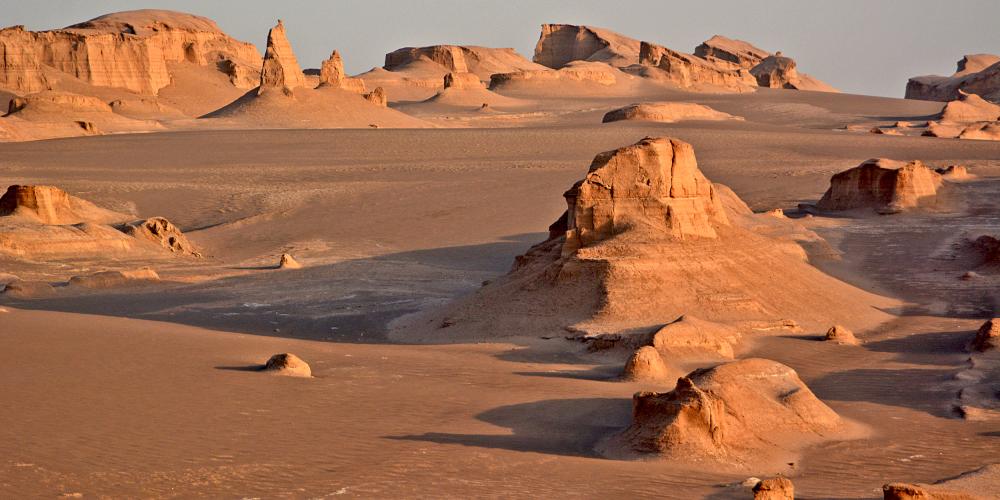
- Kalouts: One of the most iconic features of the Lut Desert is the Kalouts, a collection of massive, sculpted sandstone formations. These natural rock formations, shaped by centuries of wind and erosion, create surreal landscapes that resemble alien terrain. The Kalouts are particularly striking at sunrise and sunset when the changing light casts dramatic shadows across the desert.
- Lut Desert’s Extreme Climate: The Lut Desert holds the record for some of the highest surface temperatures ever recorded on Earth. Gandom Beryan, a plateau within the Lut Desert, reached an astonishing 70.7°C (159.3°F) in 2005, making it one of the hottest places on Earth. Despite the extreme climate, the Lut Desert remains a fascinating place to visit, with its stark beauty and unique geological features.
The Caspian Sea: Iran’s Lush Northern Shore
The Caspian Sea, the world’s largest inland body of water, lies to the north of Iran, separating the country from countries like Russia and Kazakhstan. The Caspian’s coastal regions are known for their lush forests, fertile land, and diverse wildlife, providing a stark contrast to the arid deserts found elsewhere in Iran.
- Mazandaran Province: The northern province of Mazandaran, located along the Caspian Sea, is one of Iran’s most fertile and scenic regions. Known for its verdant forests, citrus orchards, and pristine beaches, Mazandaran is a popular destination for nature lovers and tourists. The Alborz Mountains rise sharply from the Caspian Sea, creating a dramatic landscape of lush valleys and forests that are home to a variety of wildlife, including the Persian leopard.
- Caspian Marine Life: The Caspian Sea is home to a rich variety of marine life, including the famous Caspian sturgeon, which produces the prized caviar. The sea is also home to numerous species of fish, aquatic mammals, and migratory birds, making it an important ecological region.
The Persian Gulf: A Strategic Coastal Region
To the south of Iran lies the Persian Gulf, an integral part of the country’s coastal landscape. The Gulf is bordered by Iran to the north and Arabian Peninsula to the south, and it is known for its beautiful coastline, rich marine biodiversity, and warm waters. The Gulf’s warm waters support a wide variety of marine life, including dolphins, sea turtles, and diverse species of fish and coral. Iran’s southern coastlines are also home to numerous islands, such as Qeshm and Hormuz, which boast stunning landscapes, unique geological formations, and vibrant cultural heritage.
Conclusion
Iran’s natural wonders are as diverse and striking as the country itself. From the towering peaks of the Alborz Mountains to the arid beauty of the Lut Desert, Iran offers some of the most dramatic landscapes in the world. The country’s vast and varied geography provides a rich tapestry of ecosystems, ranging from lush forests and wetlands to scorching deserts and pristine coastlines. Whether trekking through the Alborz range, exploring the mysterious formations of the Lut Desert, or relaxing along the Caspian Sea, Iran’s natural beauty offers endless opportunities for exploration and adventure.